
Otto Hughes · 4 September 2026
Navigating Content Lifecycle Patterns for Independent Niche Publishers
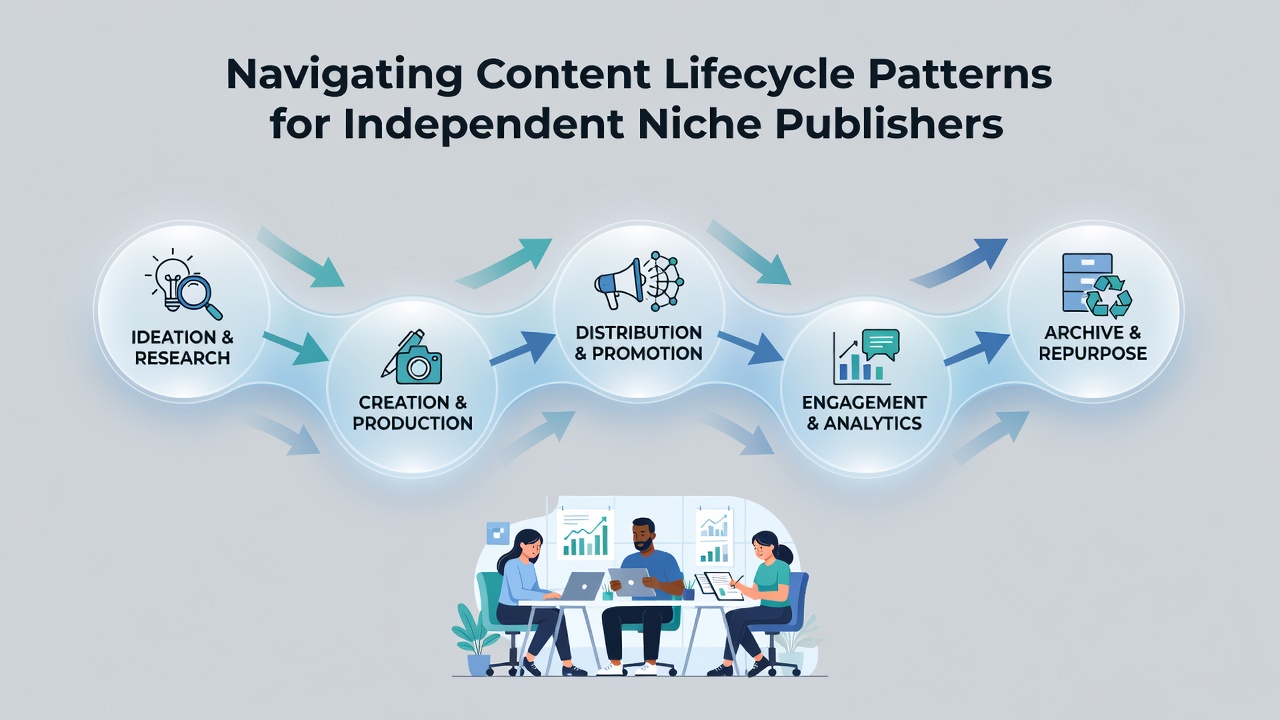
Independent niche publishers manage content through distinct stages that span from initial research to long-term archiving, and these patterns have evolved with shifts in audience behavior and platform algorithms. Data from multiple industry analyses show that successful operations follow repeatable cycles involving creation, distribution, performance tracking, repurposing, and eventual retirement of assets.
Core Stages in the Content Lifecycle
Observers note that the lifecycle typically begins with topic identification tied to audience search patterns and ends with decisions about updating or removing older material. Researchers at academic institutions have mapped these stages across hundreds of small publishing operations, revealing consistent sequences where each phase informs the next. In September 2026, updates to search engine indexing protocols prompted many niche sites to accelerate their review cycles for evergreen material.
Planning incorporates keyword data and competitor audits, while creation focuses on formats that match reader preferences such as long-form guides or data visualizations. Distribution then occurs through owned channels like email lists and third-party platforms, with performance metrics guiding subsequent adjustments.
Creation Patterns for Specialized Audiences
Experts tracking independent publishers find that content ideation often draws from community forums, industry reports, and direct reader feedback rather than broad trends. One study of digital outlets revealed that teams allocating 30 percent of their workflow to research produced material with longer average engagement times. Writers in niche verticals like hobbyist mechanics or regional history frequently combine primary sources with original analysis to differentiate their output.
Production tools have standardized around collaborative platforms that allow version control and asset libraries, reducing duplication across projects. Those who've examined workflow logs observe that batch creation sessions yield higher output consistency compared to daily incremental drafting.
Distribution and Initial Reach
Once published, content moves through scheduled promotion sequences that include social sharing, newsletter placement, and syndication partnerships. Figures from digital marketing consortia indicate that niche publishers who coordinate release timing with related events see measurable lifts in referral traffic within the first 48 hours. Algorithms on major platforms reward consistent posting cadences, so many operations maintain editorial calendars that align new material with seasonal interest spikes.
Cross-promotion between related niche sites has become a documented tactic, where reciprocal links and guest contributions expand reach without paid advertising. Data compiled by research groups in North America and Europe demonstrate that diversified distribution reduces dependence on any single algorithm change.
Performance Tracking and Iteration
Analytics platforms provide the data that closes the feedback loop, allowing publishers to identify which pieces warrant updates or expansion. Government statistical agencies in Canada and Australia have published reports on digital media consumption that highlight how smaller publishers use open-source tools to monitor bounce rates and scroll depth. These metrics determine whether content enters a repurposing queue or moves toward archival status.
Regular audits, often conducted quarterly, compare current performance against historical benchmarks, revealing patterns such as declining traffic on older how-to articles that need fresh examples or updated statistics.
Repurposing and Asset Extension
Content that retains relevance frequently gets adapted into new formats such as podcasts, infographics, or threaded social summaries. Industry organizations focused on digital publishing have documented cases where repurposed material generated secondary traffic streams months after the original release. This approach maximizes the return on initial research investment while maintaining topical authority within narrow subject areas.
Archiving decisions follow established criteria including traffic thresholds and topical currency, with some operations choosing to update rather than delete to preserve inbound link equity. Academic reviews of publishing practices note that transparent archiving policies also support compliance with data retention regulations in multiple jurisdictions.
Conclusion
Independent niche publishers who map their operations to these lifecycle patterns gain clearer visibility into resource allocation and audience retention. Reports from research institutions continue to track how external factors such as platform policy shifts and reader device preferences influence cycle timing. Those managing smaller outlets apply these insights to maintain sustainable output without expanding headcount, relying instead on systematic review processes that turn past performance into future planning inputs.